

We use cookies to optimize your experience, analyze traffic, and personalize ads. Please choose whether you accept our use of non-essential cookies. Read More

Beyond the Binary
Beyond the Binary: Why Digital Safety Needs Nuanced, Inclusive Debate
by Louisa Rose, CEO of youth mental health charity Beyond
As the release of Molly vs The Machines approaches, public debate about young people and social media is growing louder and more polarised. Much of it centres on a single question: should social media be banned for young people, or not?
I understand that reaction. Parents are worried, teachers are stretched, and young people are navigating digital spaces never designed with their wellbeing in mind. But focusing on a ‘ban or no ban’ narrative risks oversimplifying a far more complex issue and distracting us from the elements that, together, will protect young people online long term.
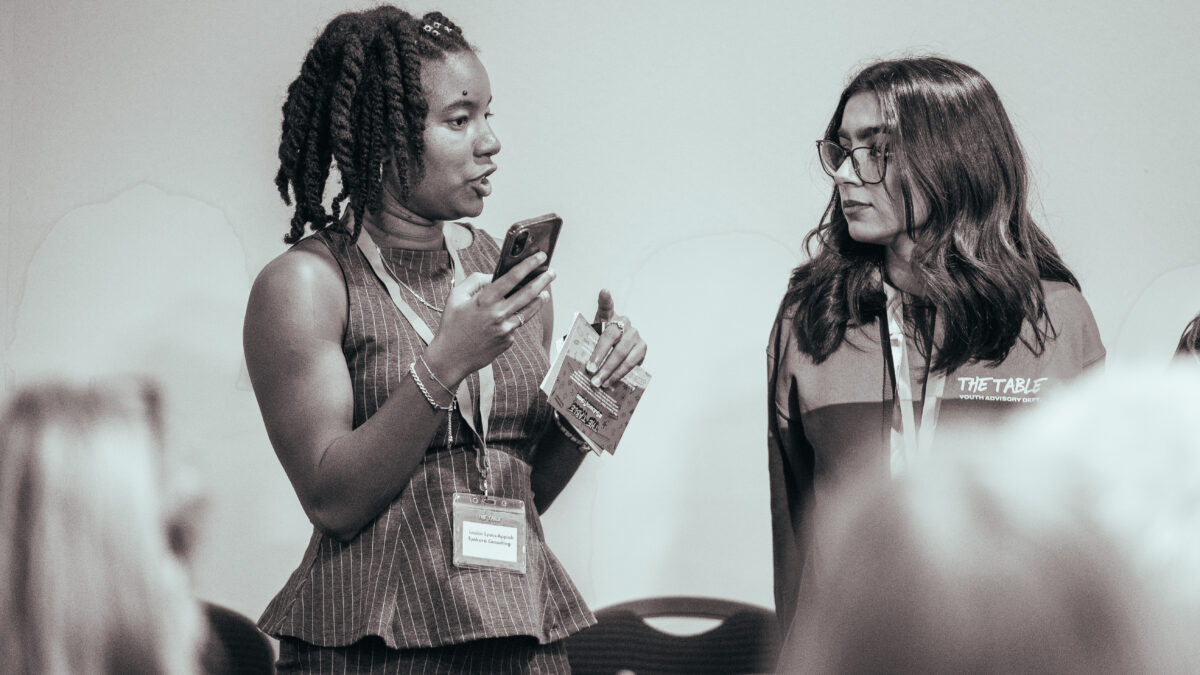
Beyond and Flippgen hosted an event in January that convened over 75 senior leaders from the digital safety debate. Designed and facilitated by young people themselves, The Table aimed to create a space for youth voice and lived experience to be heard, and for diverse healthy debate encouraged.
We listened as the young facilitators shared their reality – that even with restrictions, young people will continue to grow up in a world shaped by algorithms, group chats, gaming, AI tools and online communities. A ban might change where young people go online, but it doesn’t equip them with the skills, confidence or support they need to navigate digital life safely.
One-dimensional debates also risk sidelining crucial voices. LGBTQ+ young people, disabled and neurodivergent students, and those from marginalised communities are often missing from these conversations. For many, online spaces are not just a risk but a lifeline – offering connection, identity exploration and support that may not exist offline. Acknowledging this doesn’t deny online harm; it recognises that young people are not a single, homogenous group.
Teachers are increasingly expected to manage digital safeguarding without sufficient time, training or resources. Education seems to be focussed only on rules and restrictions so misses the point.
And parents, meanwhile, feel shame, instead of support. Technology has evolved faster than any generation before, so uncertainty is normal. What matters is staying curious, engaged and open to conversation, both at home and in partnership with schools.
If digital safety strategies are to work, young people need to be central to shaping them — not as token voices, but as experts in their own experiences.
The real question isn’t “ban or no ban?” It’s ‘how do we build a digital culture where young people are supported, informed and empowered?’ As conversations around Molly vs The Machines intensify, we can choose binary thinking – or we can lean into nuance.
If we truly care about digital safety, nuance isn’t a distraction. It’s the whole point.